
Cash proof: connecting reported performance to bank evidence
Finsider Labs / Updated September 12, 2026 / 3 min read
Cash and earnings tell related but different stories. A useful cash proof makes timing, coverage, and reconciliation differences explicit.
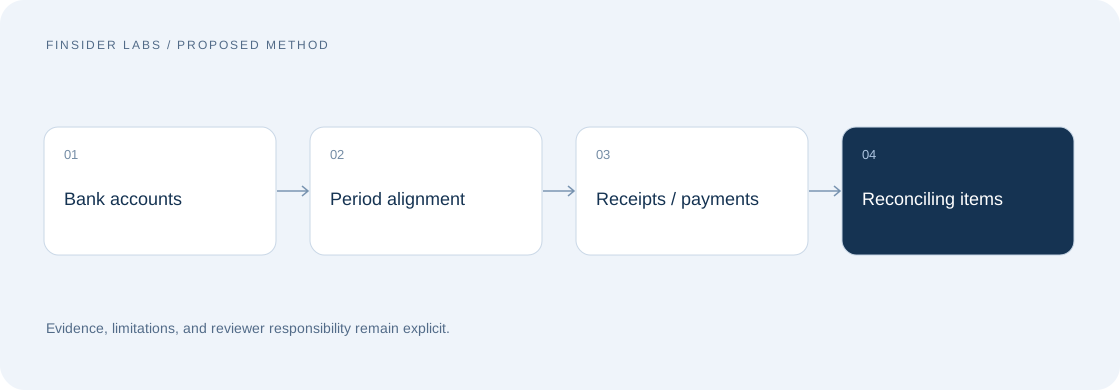
Define the accounts and period
Cash proof examines the relationship between accounting records and bank activity over a defined period. It is not a shortcut for concluding that reported revenue or earnings is correct in every respect.
Start with account completeness. Identify the relevant bank accounts, currencies, entities, and statement periods. Missing accounts or partial statements limit the analysis even when the available records reconcile.
Reconcile before interpreting
Align the periods carefully. A ledger posting date, transaction date, and bank settlement date can differ. A timing mismatch should not automatically become a revenue concern or an unexplained adjustment.
Establish opening and closing balances and reconcile movements. Confirm how transfers, financing activity, owner transactions, and other non-operating flows are treated before comparing cash with operating performance.
Separate cash receipts from revenue recognition. Collections may relate to earlier sales, customer deposits, tax amounts, or non-revenue activity. A bank deposit is evidence of a cash movement, not a complete accounting conclusion.
Explain timing and classification
Use supporting schedules where necessary. Receivables, deferred revenue, merchant settlement reports, and intercompany records can explain differences that a simple comparison of totals would leave unresolved.
Maintain source references for reconciling items. Reviewers should be able to trace a material difference to the bank statement, ledger entry, or schedule that supports the explanation.
Treat missing evidence as a scope limitation. If a period cannot be assessed, state that directly and identify the records needed to complete the work.
Document unresolved differences
Consider cash proof alongside earnings quality and working capital. The combination can produce better follow-up questions than any isolated metric, particularly when collection patterns or accruals change.
Addback includes an initial cash-proof check where the supplied evidence supports it. A deeper analysis may be appropriate in Finsider Platform or a scoped Advisory engagement.
This methodology note proposes a review sequence. It does not present empirical benchmark results or certify the accounting treatment of any transaction.
Illustrative cash roll-forward
Illustrative example / not empirical results
| Cash movement | Amount (USD thousands) | Explanation |
|---|---|---|
| Opening bank balance | 100 | Start of the defined period |
| Receipts | +300 | Includes collections; not necessarily period revenue |
| Payments | -250 | Cash outflows in the period |
| Expected closing balance | 150 | 100 + 300 - 250 |
| Statement closing balance | 148 | Illustrative source balance |
| Unexplained difference | -2 | 148 - 150; requires investigation |
Sources and context
These sources inform the discussion. They do not validate Finsider product performance or the proposed method.
Profit and cash generation are distinct. Cash flow reporting explains movements over a period rather than a balance at one date.
Cash flow statements distinguish operating, investing, and financing activities. The example here is a bank reconciliation, not an IAS 7 reporting template.