
Period alignment and evidence coverage in cash proof
Finsider Labs / Updated September 12, 2026 / 3 min read
Cash and earnings tell related but different stories. A useful cash proof makes timing, coverage, and reconciliation differences explicit.
Research question
How can a cash-proof workflow expose coverage and timing limitations before a reviewer interprets differences? The unit of analysis is a bank account, currency, and statement period aligned to the corresponding ledger account.
Coverage and reconciliation
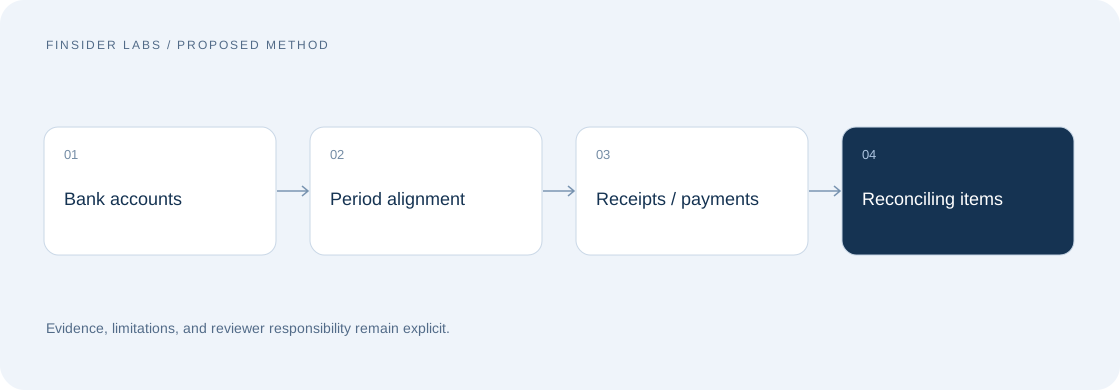
List the expected accounts and periods before calculating. For each available account, reconcile opening balance plus receipts less payments to closing balance. Establish sign conventions and rounding. Keep currencies separate unless a documented conversion method is part of scope. Missing accounts remain a coverage limitation even if the available accounts reconcile.
Classify differences
Distinguish outstanding items, settlement timing, inter-account transfers, bank fees, financing, and unexplained variances. Compare like periods and avoid counting an internal transfer as customer revenue. Preserve the bank and ledger references for each material reconciling item; management explanations should not silently become verified evidence.
Proposed evaluation
Use constructed cases with known timing differences, transfers, missing statements, and duplicate imports. Separately report reconciliation arithmetic, coverage detection, and classification agreement against a documented reviewer reference. State tolerance and units in advance. A zero difference is not a completeness metric. There are no empirical results in this paper.
Interpretation limits
A cash proof supports questions about the relationship between the books and bank activity. It does not, by itself, establish revenue recognition, ownership of an account, absence of fraud, or the sustainability of earnings. Receivables, deposits, taxes, financing, and non-cash entries require their own treatment.
Illustrative cash roll-forward
Illustrative example / not empirical results
| Cash movement | Amount (USD thousands) | Explanation |
|---|---|---|
| Opening bank balance | 100 | Start of the defined period |
| Receipts | +300 | Includes collections; not necessarily period revenue |
| Payments | -250 | Cash outflows in the period |
| Expected closing balance | 150 | 100 + 300 - 250 |
| Statement closing balance | 148 | Illustrative source balance |
| Unexplained difference | -2 | 148 - 150; requires investigation |
Sources and context
These sources inform the discussion. They do not validate Finsider product performance or the proposed method.
Profit and cash generation are distinct. Cash flow reporting explains movements over a period rather than a balance at one date.
Cash flow statements distinguish operating, investing, and financing activities. The example here is a bank reconciliation, not an IAS 7 reporting template.