
What a pre-QoE screen can and cannot tell you
Finsider Labs / Updated September 12, 2026 / 3 min read
A first-pass financial screen should identify the next diligence questions, not turn incomplete records into definitive conclusions.
Start with a decision, not a verdict
A pre-QoE screen helps a deal team decide whether a target merits deeper financial diligence. Its purpose is to organize available evidence, identify questions, and make information gaps explicit. It is not an audit, review, or CPA assurance engagement.
Begin by recording the target, analysis period, source files, and the business question. A screen built from a partial ledger should not imply that all bank activity, contractual exposure, or customer relationships have been examined.
Establish the evidence boundary
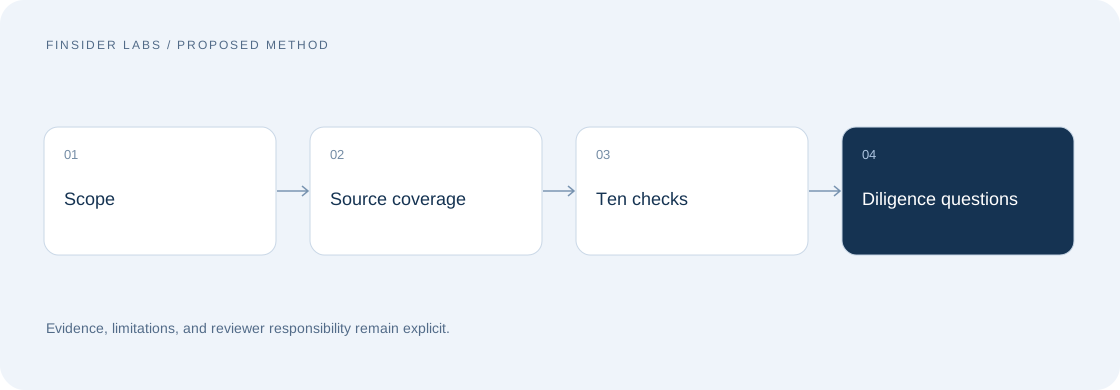
Addback applies ten checks: EBITDA and addback candidates, revenue quality, customer concentration, working capital, cash proof, margin analysis, anomalies, related-party exposure, change-of-control exposure, and data completeness.
These checks depend on the evidence supplied. Structured spreadsheets and accounting exports support financial calculations. Bank and contract screening may draw on supporting document text. A missing source limits what can be assessed.
A candidate adjustment is a request for review. An unusual expense may be non-recurring, normal for the business, or simply described poorly in the ledger. The reviewer must establish the context before accepting an EBITDA adjustment.
Separate candidates from conclusions
Keep each material finding connected to its source file and row. Where a document supports the analysis, retain enough location information for a reviewer to find the relevant passage. A summary without a reviewable source is not a substitute for evidence.
Unknown and zero are different states. If a check lacks sufficient support, mark it not assessable and explain which record would resolve the gap. Do not substitute an estimate merely to produce a complete-looking report.
Review earnings, cash, and working capital together. A positive earnings trend can coexist with weak collections, unusual accruals, or a changing working capital requirement. Screening is a way to identify those relationships for follow-up.
Choose the next level of diligence
Record the next action alongside the finding: request a reconciliation, obtain missing statements, discuss an adjustment with management, or expand the analysis period. Useful screening produces a focused diligence agenda.
When the target merits deeper work, choose a scoped CPA-led Advisory engagement or continue with your own team in Finsider Platform. Preserve the screen as an initial evidence record, not as a final transaction opinion.
This Finsider Labs methodology note proposes a practical review framework. It does not report a benchmark, measured improvement, or assurance conclusion. Its usefulness depends on the completeness of the records and the quality of professional review.
An expense worth investigating, not an automatic addback
Illustrative example / not empirical results
| Observation | Evidence needed | Screening treatment |
|---|---|---|
| A ledger memo says "one-time consulting" | Invoice, service period, management explanation | Candidate only |
| Bank statements cover two of twelve months | Statements for the missing accounts and periods | Full-period cash check not assessable |
| Two rows share a description and amount | Transaction IDs and source export history | Potential duplicate; do not remove automatically |
Sources and context
These sources inform the discussion. They do not validate Finsider product performance or the proposed method.
Financial due diligence considers earnings, assets, working capital, and cash flow. This is industry context, not evidence about Finsider performance.
Earnings normalization requires analysis of historical results and proposed adjustments, not automatic acceptance of management addbacks.