
From screening to a CPA-led Quality of Earnings engagement
Finsider Labs / Updated September 12, 2026 / 3 min read
The transition from a screen to QoE begins with scope, evidence requirements, and professional judgment, not a change in the report title.
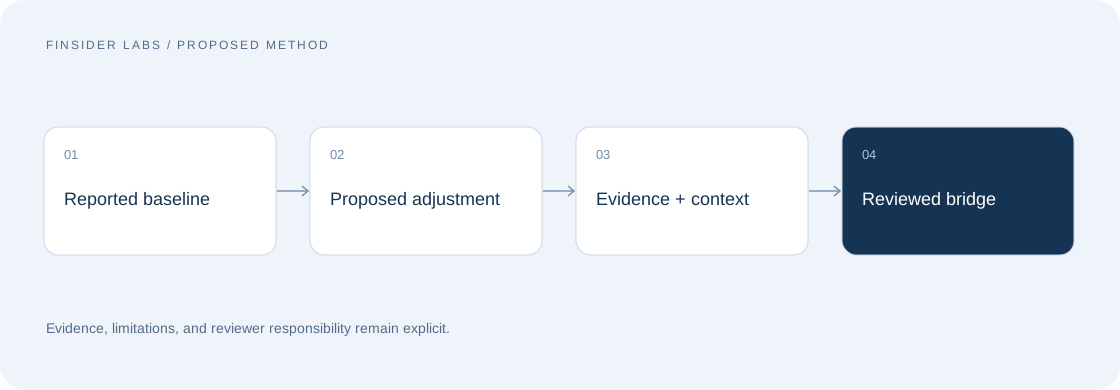
Define the engagement
An initial screen and a Quality of Earnings engagement answer different questions. Screening helps prioritize the next steps. A QoE engagement applies a defined scope of financial analysis and professional review to the transaction.
Set the analysis period, entities, intended users, deliverables, timing, and responsibilities before work begins. Full and streamlined scopes should be distinguishable, especially where working capital and proof of cash are concerned.
Build the financial baseline
The financial baseline commonly includes historical statements, monthly trial balances, transaction-level general ledger detail, and bank records. Revenue by customer and management explanations can be important supporting sources.
Reconcile the starting point before discussing adjusted earnings. Differences between financial statements, trial balances, and ledger exports need an explanation; they should not disappear inside a normalization step.
Review each proposed adjustment on its own merits. Consider whether it is supported, whether it belongs in the analysis period, whether it is genuinely non-recurring, and whether accepting it would duplicate another adjustment.
Review adjustments in context
Owner-related and related-party items require context. A cost may change after a transaction, but the expected replacement cost or continuing obligation matters when interpreting sustainable earnings.
Avoid treating a favorable adjustment list as the complete analysis. Examine revenue quality, customer concentration, margins, working capital movements, and the relationship between earnings and cash.
Keep management explanations distinguishable from independent source evidence. An explanation can guide the work, but it should not be presented as a verified fact merely because it appears in a diligence file.
Communicate the conclusion and its limits
Finsider Advisory offers full and Lite buy-side and sell-side QoE, business valuation, LBO modeling, and M&A advisory hours. The deliverables, CPA sign-off, timing, and pricing are confirmed for the specific engagement.
Use the final deliverable to communicate the reviewed analysis, material adjustments, unresolved issues, and scope limitations. The objective is a better-informed transaction decision, not a guarantee about future performance.
This is a general methodology discussion, not an accounting opinion on a particular company. A pre-QoE screening report does not become an assurance engagement through reformatting or automated summarization.
Illustrative EBITDA bridge, not a company result
Illustrative example / not empirical results
| Bridge item | Amount (USD thousands) | Treatment |
|---|---|---|
| Reported EBITDA | 1,000 | Starting point |
| Supported one-time expense | +80 | Illustrative accepted adjustment |
| Non-operating income | -30 | Illustrative accepted adjustment |
| Unsupported management proposal | 0 | Excluded pending evidence |
| Illustrative adjusted EBITDA | 1,050 | 1,000 + 80 - 30 |
Sources and context
These sources inform the discussion. They do not validate Finsider product performance or the proposed method.
Earnings normalization requires analysis of historical results and proposed adjustments, not automatic acceptance of management addbacks.
Financial due diligence considers earnings, assets, working capital, and cash flow. This is industry context, not evidence about Finsider performance.