
A structured approach to working capital analysis
Finsider Labs / Updated September 12, 2026 / 3 min read
Before debating a working capital target, agree on the accounts, periods, and operating assumptions that define the analysis.
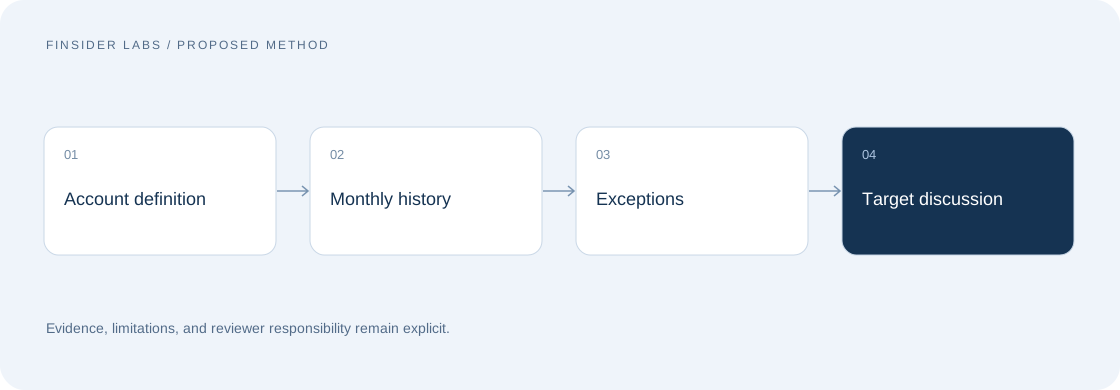
Research question
How can working capital analysis remain comparable across periods when account definitions and business conditions change? The proposed method begins with the inclusion schedule, not a preselected target or peg.
Definition and period contract
Specify included accounts, excluded balances, entities, currency, and any agreed adjustments. Link every balance to the financial baseline and supporting subledger where available. Keep potential debt-like or other transaction items from being counted inconsistently across different analyses. The transaction agreement, not a generic template, governs contractual treatment.
Monthly analysis
Build a consistent monthly series using the same account definition. Review collections, inventory behavior, supplier terms, accruals, seasonality, and growth. Mark missing periods rather than inserting zero. Show unusual items both as reported and under the proposed adjustment so reviewers can see their effect.
Proposed evaluation
Test mapping consistency, reconciliation to the trial balance, period completeness, and correct propagation of exclusions. Include seasonal cases and cases with rapid growth so an annual average is not treated as automatically representative. Arithmetic can have an exact reference; a negotiated target generally cannot. No target recommendation or evaluation results are provided.
Decision boundary
Present the history, assumptions, alternatives, and unresolved questions to the transaction team. A simple average can describe a defined dataset but is not inherently the appropriate contractual target. Scope decisions and purchase agreement terms require the parties and their professional advisors.
Illustrative operating working capital
Illustrative example / not empirical results
| Included balance | Amount (USD thousands) | Scope assumption |
|---|---|---|
| Trade receivables | 180 | Included for this example |
| Inventory | 120 | Included for this example |
| Trade payables | -100 | Deducted for this example |
| Operating accruals | -40 | Deducted for this example |
| Operating working capital | 160 | 180 + 120 - 100 - 40 |
| Cash, debt, and taxes | Excluded | Example definition only; agree the actual scope |
Sources and context
These sources inform the discussion. They do not validate Finsider product performance or the proposed method.
Seasonality, growth, industry context, and unusual transactions can affect a working capital target. A historical average is not automatically the negotiated target.